

Distracted driving is epidemic
A poll released by Harris Interactive/HealthDay, indicates that most adults who drive on a regular basis readily admit to having engaged in distracted driving behaviors. Eating and drinking lead the list at 86%, talking on non hands free cell phone 59%, using a GPS 41%, texting 37% and applying makeup 14%.
Distracted driving is any driving in which less than your full attention capabilities are going toward driving safely. Distracted is operating a motor vehicle, truck, or car when you are texting, talking on the phone, talking to people in the car, looking around at places that are other than on the roadway.
Distracted Driving is Dangerous
Distracted driving is dangerous. In 2018, 2,841 people were killed in crashes involving a distracted driver. An estimated additional 276,000 were injured in motor vehicle crashes involving a distracted driver. 18% of injury crashes in 2010 were reported as distraction-affected crashes.
Increases Risk of Collisions
A University of Utah study found that talking on a mobile phone increases your chance of a collision by four times. This is about the same chance as if you were driving drunk. Texting increase this risk to eight times.
Driving distracted is easy
As my then 17-year-old daughter answered in response to the question, why do so many people use cell phones while driving?: Cell phone use is “normal.” We use cell phones all the time, so why not while driving?
Texting While Driving
Illinois law on texting is that texting is prohibited while driving. There is now a bill in the House down at the Capitol in Springfield that seeks to ban talking on the cell phone while driving. Law about not being distracted while driving--talking, texting on the phone--were designed for safety.
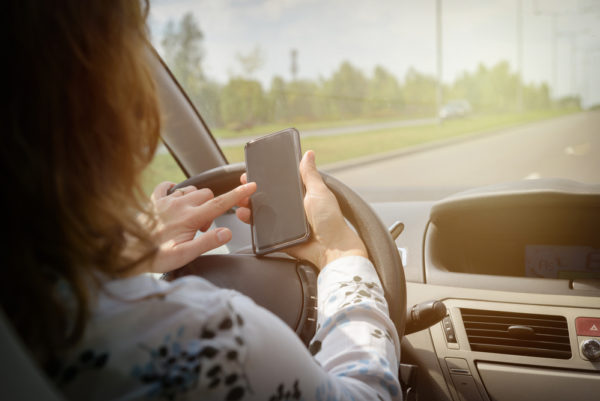
Cell phone use is a major cause of distracted driving
We think we can multi-task and do it well. We cannot. Research studies show that a multitasking person does nothing as well as a person concentrating on a single task. Research studies show that multi-tasking results in poor performance, slow performance and non-performance.
The Brain Cannot Multitask
I read a book called Brain Rules by molecular biologist John Medina. In the chapter on Attention, the author writes: “The brain cannot multi-task. Multi-tasking, when it comes to paying attention is a myth.” Wow. I thought we can all walk and chew gum at the same time. Yes he says, you can walk and chew gum at the same time, but he is talking about the brain’s ability to pay attention. He says the research firmly establishes the fact that our brain can only focus on thing at time.
For drivers, this is critical information. We think we can talk on the cell phone and drive well. Science establishes that we cannot talk on the cell phone and drive with maximum safety. Research shows that a driver on a cell phone has reaction times similar to a legally intoxicated driver with a blood alcohol content of .08. Research shows that a driver who is texting is twice as dangerous as that of a person at the legal level of intoxication. That is scary information.
Recently, I was privileged to present End Distracted Driving presentations to students at York High School in Elmhurst, Illinois. The students were mostly in Drivers Education class, so they are ready to go. These young people are at the front lines of the soon to be driving public. The experience of sharing with and hearing from the students was an eye opener. Guess who they seemed to single out as the worst offenders when it comes to distracted driving? Yes, parents.
We must work to make safe, undistracted driving “normal.” And we can all take a couple simple steps to do that. One step we can all take is to put away the cell phone when we drive. A second step is to speak up when we see others using their cell phone while driving. Let’s make safe driving “normal.”
When live in an age of distraction. We have so many things pulling for our attention. That is OK if you are sitting on the couch or just sitting around with a friend at dinner. Driving a motor vehicle that is fast, and heavy, and on wheels in a distracted manner could cause all sorts of mayhem, and you may be a victim of distracted driving.
Fines for Using Phone While Driving
In Illinois, stricter penalties for using or even holding a phone, laptop, tablet or other hand-held device while driving will take effect in July 2020. A suspended license will result if a driver receives 3 violations in a year. If a driver using a device is involved in a serious accident that causes "great bodily harm, permanent disability or disfigurement", the driver can be fine up to $1000 and lose their driving privledges.
Chicago Distracted Driving Attorneys
If you have been the victim of someone who was texting, talking on the phone, or otherwise unsafely distracted while driving, and you have questions about how to get a recovery, or how to navigate that process our distracted driving attorneys can help. Please email us at [email protected] or call (312)766-1000 or text at (312)719-2010 and we'll be happy to discuss your claim.