
When Is an Insurance Claim Denial Legally Actionable in Illinois?
Not every denied insurance claim is illegal — but some denials cross the line into bad faith under Illinois law.
A claim may be legally actionable if:
- The insurer denies coverage without a reasonable basis
- The insurer delays payment without explanation
- The insurer misrepresents policy language or exclusions
- The insurer fails to properly investigate the claim
Under Illinois law (215 ILCS 5/155), policyholders may be entitled to additional damages, attorney’s fees, and costs when an insurance company’s conduct is found to be “vexatious and unreasonable.”
If your claim has been denied, delayed, or underpaid, understanding whether the insurer’s actions violate Illinois law is the first step in determining whether you have a case.
Focused Insurance Litigation in Illinois
Insurance law is broad. Our firm focuses in three primary areas where policyholders are most vulnerable:
- Denied Life Insurance Claims: If you are a beneficiary facing a “misrepresentation” or “lapse” denial, our Life Insurance Denial Lawyers can help.
- Bad Faith & Claim Denials: When an insurer acts unreasonably, we utilize the Illinois Insurance Code to hold them accountable. Learn more about Bad Faith
- Property & Liability Disputes: We represent Chicago homeowners and business owners in complex property damage and CGL disputes.
Navigating Illinois Insurance Laws & Regulations
In Illinois, insurance companies have a duty of good faith and fair dealing when handling claims.
Under Illinois law (215 ILCS 5/155), an insurance company may be held accountable if its conduct is found to be “vexatious and unreasonable.”
This does not mean every denied claim is bad faith. However, courts may impose penalties when an insurer:
- Unreasonably refuses to pay a valid claim
- Fails to conduct a proper investigation
- Delays payment without justification
- Uses policy language in a misleading or deceptive way
If a court finds that the insurer acted improperly, it may award:
- Reasonable attorney’s fees
- Court costs
- A capped additional statutory amount under 215 ILCS 5/155
In Chicago, insurance litigation is highly procedural. Most cases are filed in the Circuit Court of Cook County (Daley Center) or, for larger claims involving diverse parties, the U.S. District Court for the Northern District of Illinois.
While the Illinois Department of Insurance (IDOI) provides a complaint portal, it is a non-binding process. For policyholders seeking a mandatory payout, a formal legal filing is typically required.
5 Common Tactics Insurers Use to Avoid Payouts
- Application Errors: Claiming you made a mistake years ago to void a current claim.
- Lack of Documentation: Demanding endless “proof” that doesn’t exist.
- Policy Exclusions: Stretching the definition of a “pre-existing condition” or “excluded act.”
- Vexatious Delay: Waiting months for a simple response to force a lower settlement.
- Illegal Lowballing: Offering a settlement far below the actual value of the loss.
Real-World Insurance Dispute Scenarios in Illinois
Insurance disputes often hinge on how policy language is interpreted and how the claim was handled. Common scenarios include:
Denial Based on Policy Exclusions
An insurer may deny a claim by citing exclusions that do not clearly apply to the situation. Disputes often arise over how broadly those exclusions should be interpreted.
Underpayment of Covered Losses
Even when a claim is approved, insurers may undervalue property damage, medical costs, or business interruption losses.
Delay Tactics
Insurers may repeatedly request additional documentation or fail to respond within a reasonable timeframe, effectively delaying payment.
Misrepresentation of Coverage
Some disputes involve insurers interpreting policy language in a way that limits coverage beyond what the contract reasonably allows.
Failure to Investigate Properly
A claim may be denied without a full investigation, especially when key evidence is ignored or overlooked.
These types of disputes often require a detailed review of the policy, claim file, and insurer communications to determine whether the denial or delay was justified.
Proven Results Against Major Insurance Carriers
- $300,000 recovered on an accidental death insurance policy after the insurer denied the claim based on blood alcohol levels and alleged suicidal ideations.
- $900,000 – Recovery for our client due to a stool collapse at a laundromat. A rotator cuff tear requires three surgeries, including total shoulder replacement.
Past results are not a guarantee of the results in future matters
Comparing First-Party vs. Third-Party Claims in Illinois
| Feature | First-Party Claim | Third-Party Claim |
| Who is Sued? | Your own insurance company | The negligent person’s insurer |
| Legal Standard | Breach of Contract / Bad Faith | Negligence / Liability |
| Common Type | Life Ins., Homeowners, UIM | Car Accidents, Slip and Fall |
| Key Statute | 215 ILCS 5/155 | Illinois Negligence Law |
Filing a Claim
An insurance claim is made after you have sustained a loss. With our lawyers’ help, you may obtain insurance proceeds from an insurance company if the loss is insured. The loss may be:
- Death of a family member
- Bodily injury
- Physical destruction of all or part of your business
- Physical destruction of your home
- Physical destruction of another valuable property
Types of Insurance Claims
Your claim may be a claim against your insurance policy. A claim against your insurance company is known as a “first-party claim.” Examples of insurance policy claims against your own insurance company:
- Life insurance claims
- Disability insurance claims
- Business interruption insurance claims
- Theft insurance claims

You may have a claim against the insurance policy of an individual or company that caused your loss. A claim against another individual’s or company’s insurance policy is known as a “third-party claim.” Examples of insurance policy claims against another party’s policy include:
- Claim for injuries due to an auto collision
- Falling at a home or a place of business
- Damage to your property due to another’s negligence
When making an insurance claim, you are a lone claimant against a savvy, wealthy, experienced goliath – the insurance company. They can outmaneuver you in multiple ways. Our experience collecting insurance claims will help level the playing field.
Auto Insurance Claims
Auto insurance claims are a common type of insurance claim arising from vehicle accidents, collisions, or damage. If you have been involved in an auto accident, filing a claim with your insurer is often necessary to cover repairs, medical expenses, or other losses. It is important to report the accident promptly and provide accurate information to your insurance company.
Auto insurance claims can be complex due to the involvement of multiple parties, such as other drivers, insurance companies, repair shops, and medical providers. Insurance companies may seek to minimize payouts or delay claim processing. Having experienced legal representation can help ensure that your rights are protected and that you receive the compensation you deserve for injuries, vehicle damage, lost wages, and other related expenses.
If your auto injury insurance claim is denied or delayed, you have the right to request a detailed explanation and seek an independent review. Consulting with a skilled Chicago insurance lawyer can provide guidance on your options and help level the playing field against insurance companies.
What should I do if my insurance claim is denied?
If your insurance claim is denied, you can contact the company and ask for a detailed explanation of the reasons for the denial. If you are unsatisfied with their answer, you can ask for an independent review by a qualified professional. If the claim is still denied, you may want to consult with an attorney experienced in insurance law.
Chicago Insurance Lawyers Protecting Your Rights
Don’t let insurance companies dictate your outcome. Call or text Blumenshine Law Group today for a Free Case Review at (312) 766-1000 or use our online contact form, and let our experienced Chicago insurance lawyers fight for the compensation you deserve. Schedule Your Free Case Review Now!
What if My Dispute Involves a Small Dollar Amount?
Not every insurance dispute requires a lawsuit. If your disputed amount is below $10,000 (the Illinois Small Claims Court limit) or involves a minor customer service issue, you may be able to resolve it without hiring an attorney.
File a Complaint with the State: The Illinois Department of Insurance (IDOI) accepts complaints involving delays, denials, and other insurer conduct. The process is non-binding and does not itself compel payment, but it may help policyholders obtain a regulatory review of the dispute.
- Small Claims Court: For disputes under $10,000, the Illinois Small Claims Court provides a simplified process for individuals to resolve conflicts without extensive legal fees.
When Should You Contact an Insurance Lawyer?
Not every insurance dispute requires legal representation. In many smaller claims, especially those involving limited financial loss, policyholders may be able to resolve the issue through the Illinois Department of Insurance or small claims court.
However, legal representation may be appropriate when:
- Your claim involves substantial financial loss or business interruption
- The insurance company has denied your claim without a clear or valid explanation
- The insurer delays payment or fails to respond
- The policy language is complex or disputed
- The claim involves potential bad faith under Illinois law
Because our firm works on a contingency basis, we focus on cases where legal action can meaningfully impact the outcome. If your dispute involves a smaller amount, we may recommend alternative options such as filing a complaint with the Illinois Department of Insurance or pursuing the matter in small claims court.
Insurance Claim FAQs
How do I know if I need an insurance lawyer?
Not every insurance dispute requires legal representation. However, it may make sense to speak with an insurance lawyer if your claim has been denied without a clear basis, the insurer is delaying payment or failing to respond, the policy language is disputed, or the claim involves substantial financial loss, business interruption, or potential bad faith under Illinois law.
What should I do if my insurance claim is denied?
First, review the denial letter carefully for the specific reason provided. Gather all relevant documentation, then consult with a Chicago insurance lawyer. We can assess if the denial was ‘bad faith’ and help you file an appeal or lawsuit.
How long does it take to resolve a claim dispute?
Timelines vary by complexity. Some disputes are resolved in weeks via negotiation, while bad-faith litigation can take months. An attorney can provide a more accurate timeline after reviewing your specific case file.
What is insurance bad faith in Illinois?
Under Section 155 of the Illinois Insurance Code, bad faith occurs when an insurer’s conduct is ‘vexatious and unreasonable.’ This may allow you to recover attorneys’ fees and additional penalty damages in addition to your claim.
What are the most common reasons for a life insurance claim denial in Chicago?
Life insurance companies in Illinois often deny claims due to “material misrepresentation” on the application, supposed policy lapses during the grace period, or disputes regarding the cause of death. Our life insurance denial lawyers specialize in auditing the insurer’s records to prove the policy was active and the application was truthful.
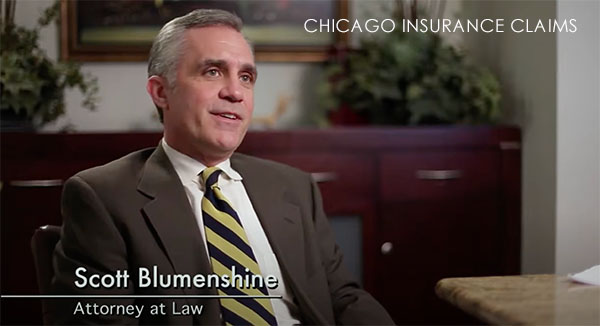
Scott Blumenshine is an experienced Illinois trial attorney who has spent over 37 years helping clients resolve insurance claim denials and disputes. He is committed to holding insurance companies accountable when they fail to honor their policies.